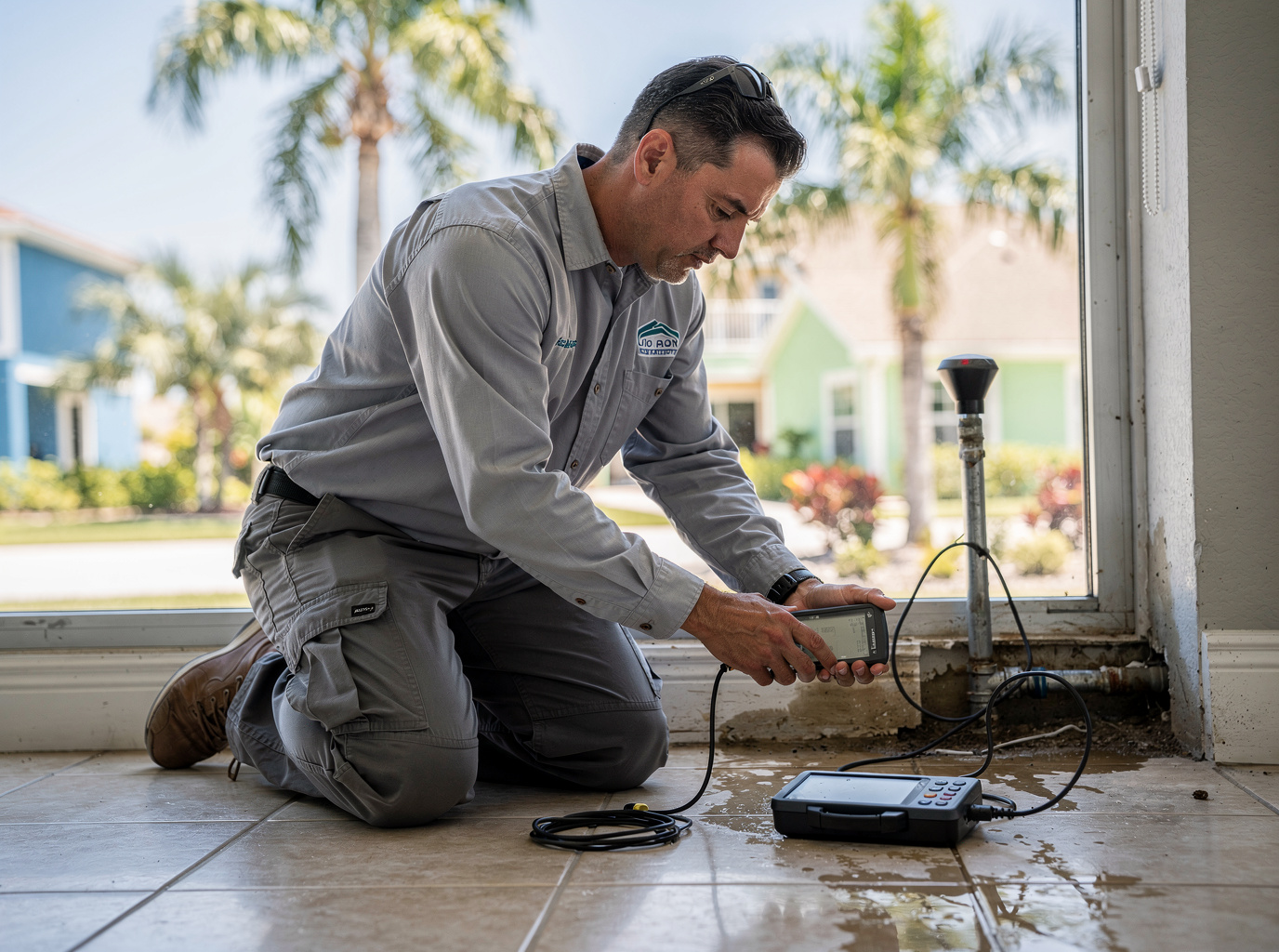
Cape Coral’s tropical climate brings constant humidity and seasonal water table fluctuations that stress copper and PVC lines under slabs. Homes in Cape Coral Isles and Burnt Store often sit on older galvanized or polybutylene runs installed when the city expanded in the 1970s and 1980s. These materials corrode faster when sandy soils shift during dry winters or when irrigation systems run daily in summer. Technicians start with acoustic listening devices and thermal imaging before any concrete is cut, because once a slab is opened the repair cost rises quickly in high water table zones near the Caloosahatchee.
Electronic leak detection works best on pressurized lines, yet many Cape Coral properties also have gravity drains under patios and pool decks. In neighborhoods close to the Cape Coral Yacht Club or Four Freedoms Park, salt air accelerates fitting corrosion on exposed outdoor valves. A thorough survey includes isolating each zone at the manifold, then testing static pressure over several minutes while monitoring for drops that indicate pinhole leaks. Homeowners in North Fort Myers and Sanibel often request the same service after noticing unexplained spikes in their monthly utility bills during the humid season.
Access points matter. Many slab leaks occur near the water heater or under the garage slab where the main enters the home. In Burnt Store, newer construction sometimes uses PEX, but the transition fittings to older copper still fail. Detection crews carry both correlators and video inspection cameras so they can trace the exact leak location without guessing. This approach prevents unnecessary demolition in living areas and keeps the job contained to the smallest possible opening.
Soil and Water Table Effects on Detection Accuracy
Sandy Lee County soils transmit sound differently than clay, so acoustic readings must be calibrated on site. High water tables after summer rains can mask small leaks until pressure testing is performed with the system isolated.
Technician insight
In Cape Coral, the thing that catches most people out with Water Leak Detection is the high water table in Burnt Store and Cape Coral Isles. After a wet summer the sand stays saturated, so small leaks stay hidden until we isolate the line and run a timed pressure test. Homeowners often think the problem is the irrigation system when it is actually the main under the slab.
Slab Leak Near Garage in Cape Coral Isles
Homeowner noticed rising water bill and damp carpet along one wall. We isolated the cold line feeding the laundry area and ran a static pressure test that dropped 12 psi in 20 minutes. Acoustic sensors pinpointed the leak under the garage slab near the main entry point. We marked the spot, confirmed with a small core sample, and handed the owner a map for the repair crew to follow.
How it works
- 1
Initial Consultation and History
Review utility bills and note any recent construction or irrigation changes in the specific neighborhood.
- 2
Zone Isolation
Shut off individual circuits at the manifold and test static pressure on each line serving the home.
- 3
Non-Invasive Scanning
Use acoustic sensors, thermal cameras, and moisture meters to locate the leak without breaking concrete.
- 4
Confirmation and Mapping
Mark the precise spot on the slab and document depth and pipe material for the repair crew.
- 5
Report and Options
Provide a written summary with photos and recommended next steps for the homeowner.
Pricing
Detection pricing depends on number of zones, slab access, and whether excavation is required later.