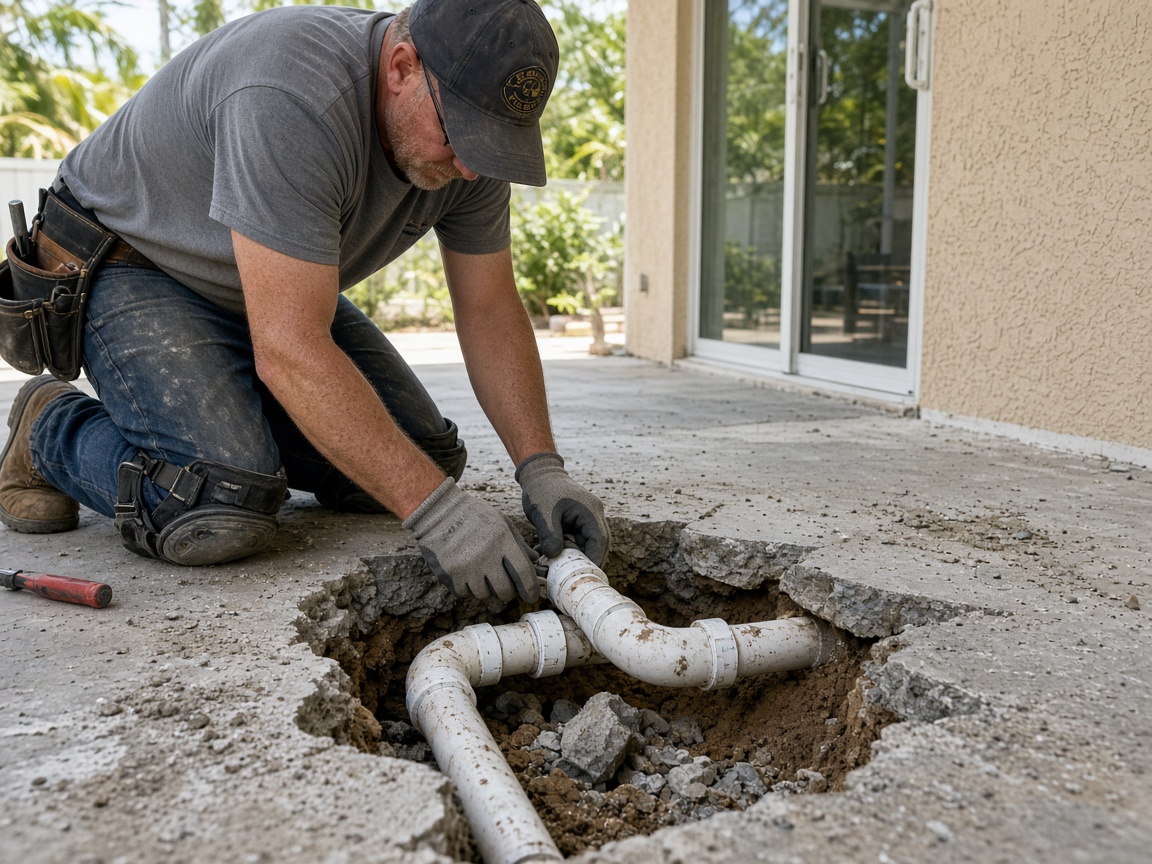
Cape Coral's tropical climate with hot humid summers and dry winters creates constant expansion and contraction stress on slab-embedded supply lines. Homes built in the 1970s through 1990s in neighborhoods like Cape Coral Isles and Burnt Store often have original copper or early PVC runs that corrode where they meet the slab edge near the Cape Coral Yacht Club area. Rerouting moves the line into walls or attic spaces using PEX or CPVC, which handle the humidity swings better than rigid materials left in the ground.
Lee County permitting requires any reroute that crosses property lines or affects multiple fixtures to stay accessible for inspection, so we avoid burying new lines back under the slab whenever possible. Soil in the region is sandy and shifts slightly during heavy summer rains, which can pinch old pipes against the concrete. We map the existing layout first using a camera to locate every elbow and valve before cutting access points, preventing unnecessary demolition in living areas near Four Freedoms Park.
Edge cases appear in Downtown Cape Coral properties where additions were added over time without updating the original slab plumbing. These homes frequently have mixed pipe materials that fail at transition points. We isolate the leak, cap the old run inside the slab, and bring new lines through exterior walls to reach bathrooms and kitchens, keeping the finished floor intact except for small entry and exit patches.
Common Materials Used in Local Reroutes
PEX tubing with crimp or expansion fittings is the standard choice here because it flexes with seasonal ground movement. CPVC is selected when homeowners prefer a rigid option that matches existing schedules. Both materials resist the mineral content found in Cape Coral municipal water better than older galvanized sections still present in some Burnt Store homes.
Technician insight
In Cape Coral, the thing that catches most people out with Slab Pipe Rerouting is the sandy soil shifting against the slab edge during summer rains. Homes in Cape Coral Isles often have the original copper pinched right where it exits the concrete, and trying to repair in place usually fails again within a year. We always reroute to the attic or exterior wall instead.
Burnt Store Home Supply Line Failure
A homeowner noticed low pressure at the master shower only during peak morning use. Camera inspection showed a pinhole leak in the cold line under the slab near the back wall. We capped the old run, ran new PEX through the attic to the vanity and shower, and restored flow without disturbing the tile floor.
How it works
- 1
Camera Inspection
We run a camera through accessible lines from the water heater or meter to map every leak location and pipe material without opening the slab first.
- 2
Isolation and Capping
The leaking section is isolated, pressure tested, and capped inside the slab so no water remains in the abandoned run.
- 3
New Line Routing
New PEX or CPVC is run through walls or attic spaces from the main to each fixture, following the shortest practical path that stays accessible.
- 4
Restoration and Testing
Access holes are patched, new lines are pressure tested, and fixtures are checked for flow and temperature before final cleanup.
Pricing
Cost depends on number of fixtures served, access difficulty, and whether walls must be opened in finished spaces.