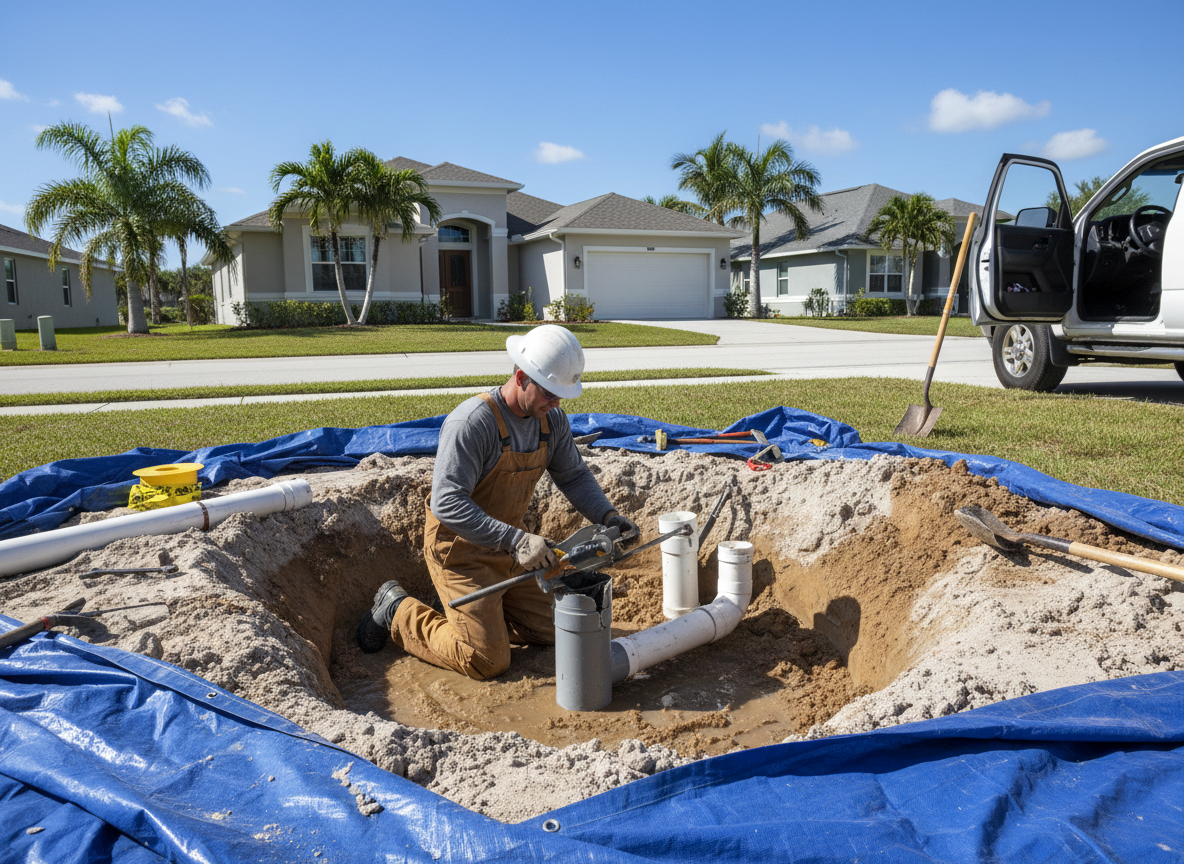
Cape Coral homes built from the 1970s onward in neighborhoods such as Cape Coral Isles and Burnt Store often sit on sandy fill over a high water table. This setup lets tree roots from older plantings reach PVC and cast-iron lines quickly, especially after the wet season raises groundwater. Technicians locate leaks with acoustic sensors and video cameras before any digging starts, then isolate sections without disturbing slabs or driveways when possible.
Tropical humidity accelerates corrosion on older metal pipes while dry winter months cause soil contraction that stresses joints. Properties near the Cape Coral Yacht Club or Four Freedoms Park frequently show leaks where lines cross under irrigation or near seawalls. Repairs use trenchless epoxy lining or targeted excavation with schedule-40 PVC or copper where code requires, followed by compaction and sod replacement to match existing landscaping.
Work in Lee County must follow local permitting rules for backflow prevention and proper bedding material. Crews from the shop at 3103 Santa Barbara Blvd #105 carry the right shoring and dewatering equipment because sudden rain can flood trenches in low-lying Burnt Store lots. Homeowners in nearby Fort Myers or Sanibel see similar issues but Cape Coral’s canal system adds extra variables around pipe depth and access.
After repair, pressure testing confirms integrity before backfill. This step prevents callbacks when summer rains return and saturate the ground again.
Technician insight
In Cape Coral, the thing that catches most people out with Underground Pipe Repair is the combination of sandy soil and the high water table around Cape Coral Isles and Burnt Store—once you open a trench the sides can collapse fast after a rain, so you have to plan shoring and dewatering before you start digging.
Burnt Store Canal Home
Homeowner noticed damp soil near the driveway after heavy summer rain. Camera showed a cracked cast-iron line where roots had entered near the canal bulkhead. Crew installed a trenchless epoxy liner from the cleanout to the main, avoiding the slab and restoring the surface the same day.
How it works
- 1
Site Assessment
Technicians review the property layout in areas like Downtown Cape Coral or Cape Coral Isles, check for visible moisture, and use listening devices to narrow the leak zone.
- 2
Camera Inspection
A video scope runs through accessible cleanouts to confirm pipe material, damage extent, and nearby roots or corrosion points without opening the slab.
- 3
Repair Execution
Crew selects trenchless lining or limited excavation based on pipe depth and location, installs new section or liner, then restores bedding and surface.
- 4
Final Testing
Lines are pressurized and monitored, permits closed if required, and the site left clean for the homeowner.
Pricing
Upfront quote given after camera inspection; final cost depends on pipe depth, access, and whether lining or excavation is needed.